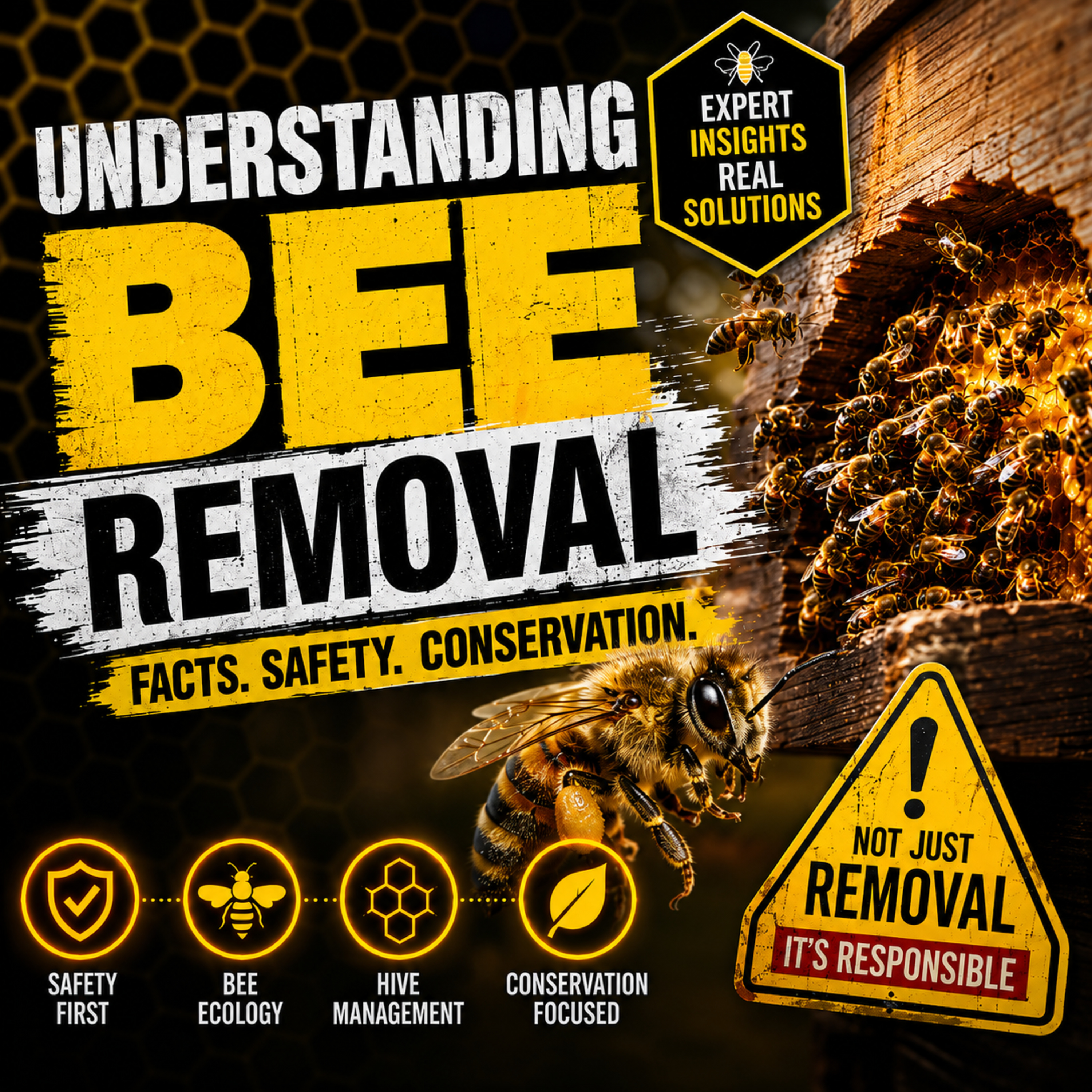
070:Bee Removal for Pest Controllers: Professional Bee Management | Clive Stewart
In this episode
Bee Removal for Pest Controllers: Professional Bee Management | Clive StewartIn Pest Perspectives Podcast EP 70, host Shaun Muller is joined by Clive Stewart, Operations Director at Westart Apiaries Ltd, for an in-depth discussion on honey bees, safe bee removal, bee-related callouts, and how the pest control industry can approach bees in a more informed and responsible way.
#AD – Pest Perspectives Podcast is proudly sponsored by Powered Now, job management software designed to help trade businesses manage quotes, invoices, scheduling, reporting and day-to-day operations more efficiently. Job Management Software For UK Trades | Powered Now
Clive Stewart is an experienced and highly educated beekeeper who supports pest control professionals across the UK. Through his work, training and practical knowledge, Clive helps pest controllers develop the confidence to recognise bee situations correctly, offer suitable advice, and, where necessary, safely remove honey bee colonies from areas of inconvenience.
His background combines practical beekeeping, environmental awareness, sustainability, training, environmental management systems and integrated pest management. Clive also holds an NVQ Level 2 in Wildlife, Fish and Wildlands Science and Management from Holme Lacy College of Agriculture, alongside BBKA qualifications through the national education scheme.
Clive is also the author of Safe Removal of Honey Bee Colonies from Buildings and delivers specialist bee removal courses to help pest professionals better understand the correct approach to honey bee colony removal.
In this episode, Shaun and Clive discuss why correct bee identification matters, when removal may genuinely be required, and why safe, informed and responsible methods are essential when dealing with honey bee colonies in buildings. They also explore the wider importance of education, sustainability and professional training within the pest management industry.
This episode is valuable listening for pest controllers, beekeepers, facilities managers, property managers, landlords, environmental professionals and anyone interested in honey bee removal, bee conservation and responsible pest management.
Honey bee removal from buildings
Recognising different bee-related situations
The role of pest controllers in bee callouts
Safe and responsible honey bee removal methods
Bee removal training and education
Clive Stewart’s book, Safe Removal of Honey Bee Colonies from Buildings
Westart Apiaries Ltd and their work with the pest control industry
How pest professionals can improve their knowledge around bees
Responsible pest management and sustainability
Learn more about Westart Apiaries Ltd and their courses here:
https://www.westart-apiaries.co.uk/
Visit the UKBR website here:
https://www.ukbr.org/
Watch or listen to Pest Perspectives Podcast EP 70 for a practical, educational and industry-focused conversation on bees, buildings and safe removal with Clive Stewart from Westart Apiaries Ltd.
Pest Perspectives Podcast is a UK pest control podcast hosted by Shaun Muller of Oakham Pest Control Ltd. The show features practical conversations with pest control technicians, business owners, suppliers and industry experts, covering topics such as rodent control, drainage investigations, bee removal, bed bugs, wasps, commercial pest management, compliance, business growth and wider pest industry discussions.
Listen, watch and learn more at:
https://www.pestperspectivespodcast.co.uk
Topics covered in this episode include:
Transcribed automatically
Hello and welcome to Pest Perspectives episode 70 on this fine, hot day in sunny UK during the heatwave. Thanks for all the support we've had recently on the channel, all the recent follows and subscribes and comments. It all helps the channel. If you could, if I could ask, if you're on Spotify or Apple, if you could press the follow button and just leave a little review it helps i know there's 90 to 100 of you roughly listen that follow but if you could press that little review button on spotify and click the four or five stars it'd help massively it would if you could do that that would be great um thanks to powered now app software for sponsoring the podcast so we can do more shows like this it just i'll keep doing them what i mean is it helps pay for the software helps pays for cameras a micro new microphones upgrades we've now got a brand new website well i say brand new the first website so it all helps it does so yeah so uh thanks to them and this week i have on this this podcast actually happened last year but we i decided to delete it because clive was on site he was so this week i've got clive stewart here we go from west star apiaries no have i got it right well done well done yes you have got it right everyone knows i've butchered names on this podcast how are you doing mate no you did very well i'm all good how's yourself well you seem to have a better connection this time we do that was when you had anything you you went to a site where you're having a trap out
and it went wrong you know and they weren't in or out or something it was yeah we were we were at the end of the day yeah we were at the end of the day and they um uh we were at a hospital and uh if my memory serves me right it was end of the day and they were still a little bit active so we were waiting for him waiting for him to settle down to remove the remove the box because the trap out had completed so yeah it worked and um yeah we were it worked and we and we got that away from there we had to do a trap out because we couldn't open the building up due to the fact it was um cement panels so there was no brick work to take apart it was concrete panels so those couldn't be broken or you know the construction of them couldn't be um messed with so it was a case of trapping those out and that's why we use that that system i think i remember you showing me that i think at the time what you meant you did um but yeah no that's that's all good now finally got you on the podcast even though you were alive but i decided to delete it because it's quite bad weren't it connection so this is your first time on the actual podcast yeah it was yeah it was a a poor connection it was so we've been out today i'm i'm currently in london oh yeah
you're in london now yes so we're currently in london i'm in a hotel in london so yes so my day started at half past six today headed to stamford to do a survey there then headed down into Huntingdon to do a service visit there and then went on and then came down into London to do a survey in London. Sorry, you just said... And rather than drive all the way back home. Sorry, you just said Stamford there. That's not London. Yes, it started left... I know it isn't. Why didn't you ring me? I left home at Stoke Contest.
You know I live near Stamford, yeah? I didn't realise Oakland was so close to Stanford until I passed through it this morning. I was actually in Stanford as well, didn't I? So, yeah, so I've been on the road a bit today. You have? I think the best place to be with an aircon vehicle. Yeah, it definitely is. Yeah, it's nice to have the aircon on. And always, a big tip is, the little water bottles i refill them and put on the orange drink water but in this area i put them like lemon in them and i ice them up overnight overnight then in the van they melt slowly for up and then it's nice cool drink it is that's what i do it is but um yeah it's all about keeping safe in this weather definitely so what's your journey into like bee removal uh like like obviously how did you get to where you are now like how did you start out doing bee you a beekeeper is that how it started out the journey i mean uh no so my journey started out with me um i i moved from horticulture into pest control in 2010 2010 um having spent 20 something years in horticulture um on my knees in the in the soil and and what have you and i thought pest control would be a good idea as a sidestep to get myself upright little did i know i was going to be crawling around on kitchen floors and the like but hey that was another thing um but at the time um the industry was um just coming into that um time where um a pest controller had recently been prosecuted for treating bees incorrectly.
He actually got prosecuted under the Food Safety Act. I think it's the Food Safety Act.
And the industry was sort of dotting around and I think there was a handful of us doing bee removals. I'd only just kind of started in around about 2009 playing with the bee removal thing. I'd been keeping bees from 1999. But sort of experimented with bee removal in 2009.
Okay.
Hang on. The connection's gone a little bit.
Are you there? People have asked me if they could are you back hello you know Clive building in our Clive there you go you're back a lot a lot a lot I lost you there a little bit we go yeah i don't know what's going on well we'll see how it goes yeah so where did we get up to
you just got past somebody had been prosecuted and the industry didn't know what to do so yeah yeah pretty much it was it was flirting between or some of the industry was starting to experimenting bee removal um i wasn't alone there was a number of people going about um doing a bit of bee removal work um and it just kind of grew from there really it really just grew from there there was more and more interest in it each and every year and there continues to be more interest in it each and every year to the point now where i'd like to think that bee removal is the accepted way of dealing with honeybees correctly i would actually i would actually agree with that because we we recommend people we we um i got a bit annoyed last year because it wasn't anything i'd done so you know when you you tell a customer you'll happily id something for free send a photo send a video yeah yeah so i i knew this house had honeybees because it's what she was telling me so I said I can come out my way but if you want me to look at them you're going to have to pay so it was £80 plus that which is a normal call out because she didn't have a phone and after I guess family members of hers, different surnames
took to Google took to Facebook, took to any review site they could to call us cowboys for turning up and not doing anything with the bees because I told word go, I said we will not be doing anything to the bees it's literally IDing because you can't and that annoyed me because I was like the lady paid in the end but there were family members on different names like trying to tarnish us I mean a cowboy would have probably killed all the bees and ran off but the minute you rolled up the house you could see it but videoed them there was thousands of them but you know how it is she said in her house i think she'd get it done for 80 pounds plus fat but that that annoyed me a bit but when we we do put into all of our what's nest now because we've had it where we've turned up and there it's a bees nest and we put it in now the description of if we turn up on their bees we nothing will happen but you will pay 80 pounds so a lot of people now will say Just send us a photo or send us a video to confirm.
Because we don't like going out. We don't like charging that. But you've got to charge. You're not a charity, ain't you? But for a photo or video, it's easy to, you know, identify for free. So, yeah. That was an experience I thought was a bit weird. They didn't do anything for the 80. You know. So, but you have done something for the 80 pounds. You've travelled to site. Exactly. you've advised you've you've given your advice exactly and and that's you know nobody gives you free fuel to put in your car do they exactly nobody gives you free tires to put on your car do they that is true it's like nobody gives you free insurance no you're right it's yeah these things happen every so often don't they but i did i did actually did actually say to her we can't do anything but we have someone we recommend but after that experience the guy we did and it's the guy we did that does it we warned him about it and he was like i don't think i'll bother or write a contract i've write a contract up from payment first or something you know so i don't know what she did but hello um martin just out of the hot tub oh you show off
but yes so so you kept experimenting with bee removal yeah kept experimenting with bee removal and because there was nobody about doing any any training nobody to show you it was all um guesswork at the beginning okay this there's only so much beekeeping helps with bee removal um there's so in this there's potentially three trades involved there's your beekeeping side there's your building knowledge and then there's your um control knowledge so we've got pest control and beekeeping knowledge and i've got some fairly good as a handyman but needed to get more training in that sector and we've done that over time um to get to where we are today because is it right when you actually remove bees although it's right to have um a builder you need to show that builder how to remove them but also um pull it back together but So bees don't come back to it?
So they proof it up? Is that right? Yeah, so you've got to proof the building. Yeah, absolutely. And builders don't understand that part. So you've got to hold that glove as well, if that makes sense. You've got lots of advice coming in lots of different areas. but there's B removal companies that can do all the trades or most of the trades I mean access is another one we're just in the middle of doing some access training so we're doing some of the scaffold training at the moment so we can do from Sean Sean was telling me well he was telling the podcast sorry I was listening ours yeah so we've been doing a bit of that and um it's it's proven interesting and we we we can now sort of with what we've already got we can do quite a bit but the next set of training actually um takes it up another gear again so we'll be able to look at um much taller work as well i'll tell you what for you the amount of qualifications you and sean have got you'll some of the most qualified pest control going or bee removers saying you know i don't do so much of the the pest control training um you got no i i don't do the rats and mice as much um though i think i ought to do something i think i could probably do something at the back end of this year where i'll do a bit of bit of uh renew my knowledge shall we say so when so when it just on a just off a tangent there so when it goes quiet with b work what do you what do you do to fill your time then i'd like to tell you i put my feet yeah i'd like to tell you i put my feet up
and drink sangrias on the beach but it's not true um don't believe everything you hear um maintenance so we've got a lot of maintenance work goes on um we clean up we've got a lot of cleaning and rendering of some of the combs. So we render some of that down for wax, not all of it. Some of it's just not feasible to do anything with. That goes off, that that we don't render down goes off for incineration We sort of clean up smart hang on let call again he's gone again the connection's gone again everyone I'm sure he'll be back in a second he will do all the all the I can hear you and he's back in the room you're back I'm back You are back, but your picture's disappeared now.
Are you there?
Is he there? Is he there? We use rock wall to fill the void and charge a roll in. Are you there, Clive?
I can hear you in the background. Yeah, are you there? Can you see me or not? I can't see you. yeah i can hear you well we can i can hear you you can carry on if you want it doesn't matter really should we carry on like this yeah yeah yeah why not yeah yeah no why not how's that ah you're back you're back there we go look at that yeah um so what was that about rockwell what was that question about rob so that's obviously martin belch if you couldn't see the photo he put we use roll to build the void and charge charge a roll and you also put and all the cost of waste have to be priced in as well oh yeah absolutely is it what a lot of people don't realize how much is involved in doing a bee removal they're complicated because market martin was telling me that obviously our mates with him he was telling me that the older the longer the bees have got been there etc the harder the job is so they've been there years it's a much harder job and obviously that wouldn't incur more cost too it will so i didn't know that but apparently a lot of he said to me when you survey customers won't always tell you 100 the truth as to how long the bees have been there as well sometimes so uh i imagine that i imagine that's for anything though i've had it i've had it before with other things yeah
yeah um because you know they can they can vary widely absolutely hugely um but we did one two years ago where bees in a chimney in somewhere in leicestershire i can't remember whereabouts it was off the top of my head we had to have we had to have um traffic signals in because the scaffold was popped away in the code but two thousand pound a day but just for the traffic signals without the scaffolding wow that's an expensive that was up for five days
she got bees and two chimney stacks oh wow that so yeah that's not even for the work no yeah that's that's the ultimate that's the work to be able to get them 10 grand 2000 pounds
goodness it can happen can't it you know yeah it can go hugely um array with with costs
very quickly there is a scott angle is is commenting he says this problem is i'm finding a lot of newbie removal companies are going at very low costs that's effect that's affecting me this year but what i'm told they're doing it for is crazy but good luck to them
yeah so just as there is in in the rest of the pest control industry there are people that can uh that that are expensive what what you think are expensive and there are people at the at the bottom of the ladder that are doing it purely either cost or whatever the thing is there are customers at every level sean there are customers at every level and and i'm not interested in the customers that are at the bottom of the ladder
i want the customers from the middle upwards and that's what i've made my business up well you you show your knowledge your value your worth your whole business if they don't want you they don't want you you know exactly exactly i have it on a regular basis but yeah it is right pest control it's terrible especially commercial contracts sometimes i'll say well get them for that price then i've got to make money yeah end of the day you know you'll be fine scott you're a knowledgeable guy from what i gather you'll be fine you will so how did this all lead up to oh wait a minute hello jackie thanks for popping in how this lead up to you actually making b courses yeah so i just realized that was a lot of work out there and i can't do everything and i don't plan to do everything and i like how the pest control industry when it's working together and sharing knowledge works so much better so much smoother yeah you know all all those guys that that do courses kill german the e1env bpca mpta all those people they're sharing that knowledge and i just wanted to be part of sharing that knowledge that's how i've come about you've definitely established yourself within that your um everyone i know is i've known a
load of people on your courses especially martin on your course and not everybody that comes on the course goes away and does it they come on the course they and learn about it and they go actually that's probably more than i want to do but what i have now is a more foundation knowledge about what's involved going forward. And I've got as much work from it that way as I have doing the course itself. And I enjoy doing the courses. I really do enjoy doing them. There's a nice comment here from Darren Pearce.
Hi, Clive. Top man. Now this man knows how to deliver a course. Hi, Jason. thanks for popping in thank you yeah so yeah that's that's i am yeah so that's pretty much yeah so when you obviously did you take information from not information did you look at how a pest control course was structured as well like you know is that there was a bit of that went on my very first call well not the very first one because i did the very first one in in house with the pest control company i was working with um and the only technicians were the company that i was working for at the time had around i think it was around 12 or 15 technicians okay and out of all of those technicians only the ladies came on the course as we did it okay and when i did it i did it just as a practical so they came and saw a bee removal happen yeah and that that's really what ignited me um into putting a course together because what i realized was whilst i was trying to show them practical stuff their base knowledge wasn't there so i needed to put some theory together yeah and so the very first one I did was a two-day course and I did that a couple of times with a so one day was theory and one day was practical okay what has times gone on and as the bee removal industry if you want to call it that grew the information and the knowledge and
the skill set has expanded okay and it's now sort of a three day uh three days for the foundation which is a basic stuff and then we do two days on advance which is brick walls and chimneys okay So that's kind of how it panned out, really. So, yeah, it's grown over. See, I did the first course in 2014, I think. Okay. You've been doing them a long while then. Yeah. Yeah, I've been doing them a long while with a little break from the pandemic, of course. But, yeah, it's gone well. um there's plans to put some bits online um and and do some bits there with that so yeah uh there's all the little projects going on in the background and hopefully i'll be able to bring those to pest tech um because we do do the stands there so we've got a little bit of little bit of stuff to bring to we're hoping now we're we're running a couple of pilot schemes with and things at the minute and providing that they work which early stay we've had some teething difficulties but um hopefully we'll be able to bring some information to to pest tech with us and um introduce a bit a few bits and pieces that'd be nice i think i said hello to you at pest tech i was running around like a you did like like a headless chicken i was helping i'm helping again this year so i'll be there that's good so um you know i run the uh ukb removers that started out as a facebook group and became has grown to become a directory um it's recommended by a lot of people we see upwards of 2,000 enquiries come through the you know around about 2,000 a year this time of the year there's anything from sort of 20 or 30 a day one day last year we got 140 enquiries on one day so yeah it is um and there's a variety of enquiries not all of them are about honeybees
do you sorry to be part of this do you vet the people to make sure they're in good order do you vet them or can yeah so there's there's a there's a very small at the moment there's a very small um vetting process for a register for so we have three tiers have a registered trade and accredited um your registered is just to provide your um public liability insurance and your asbestos awareness okay if you're trade and accredited it's your public liability and and your asbestos cap B ticket. Okay. With accredited, there is a desktop audit as well.
So those are pretty much what it is. Oh, with the train as well, whatever training you've done effectively. Okay. um and that what we what the plan where is is to help people um climb a ladder as to become um proficient and safe is is the process is there a fee to put for people to go on it at all yes so registration um straightforward registration i think if my memory serves me right is 150 the trade is two sorry if it's 225 or 247 I should really know and and accredited is 475 I think it is to be fair I mean I don't do it but it doesn't sound too bad with B-Work I know that it wouldn't take many jobs to pay for itself really no it doesn't absolutely it doesn't one survey could pay for your you know if you've priced right could potentially pay for your membership also go on it is blurred I have started reading it I haven't got that far through it because of the heat you make you made a book you did i did kindly sent me one i read more of it i was more prepared last year for that one i didn't know the heat was coming i didn't but yeah it's a it's a nice book it explains pretty much everything it does obviously reading a book is very different from learning on training course obviously it is with reading it takes me a lot longer for things of sticks so i have to read things over and over well that's the thing about the training you see
you try you you do your training so i went off and got trained to train if that makes sense so i've got i've done my trainer training and one of the key things i picked up from doing that trainer training is trying to make sure that everybody in the room takes something on board okay
so
hang on we have dropped out people he'll be back in a second it will come back it will come back give him a minute he been doing that some for a Clive hang on oh he dropped out so yeah he probably will talk about the book well he's disappeared for a minute so thanks for watching everyone if you are watching please follow or subscribe on the chosen platform you're on if you're on podcast listening after the fact please give us a review on Apple which we were lacking on Apple so it would be nice to get a few so are you back Clive are you back Mark yeah you're back are you back I think so there you go so we'll be talking about the book there we go I'm back and you keep going off do it I'm here I am here I am here these things happen sometimes don't worry don't worry so were you talking about the book there were you yeah so I was talking about the training that's it I was saying that we try to make sure that everybody takes something away from it in whatever way form they want to learn in whether it be visual whether it be written whether it be verbal however they want to take it okay we'll learn differently anyway we do absolutely Scott Angle is saying it works I've had a lot of calls from the UKBR, highly recommended.
Mark Haywood is asking, what asbestos course do you recommend, Clive? Make sure you do. I recommend an MPTA, not an MPTA, sorry, UKATA, UKATA. Any of those courses are pretty good. and they are very good in costs as well. So we use a company across in Lincolnshire for the UKBR. Okay. So the guys that are on trade and accredited join up and have a – do their cat B because it has to be done every year. Okay. And the UKBR fund that. Okay. So, yeah. but you'll have had to join previously it's not just you can't sort of join without you can't go and do the course without joining i should say that's what i'm trying to say yeah yeah no i totally get that i do so yeah yeah right you're still there yeah just checking yeah yeah so um so when it comes to um Bee removal, have you got any basics you can share with people as to how bee removal actually works?
In essence, I'm not asking you to divulge your course, just how it's the basics for someone to understand it. We couldn't possibly touch everything on the course. I think the key thing is that surveys are key. yeah doing a good survey is absolutely key to ensure you know where they are what you've got to do to get to them and what you've got to do in relation to doing any repairs that may need to be done after you've removed them so that survey gets you all that information i've done a survey today on a property here in London.
From outside, it looked fairly straightforward. Chimney, going to need to take the render off, open up the brickwork and do. Get inside the house, and there's no chimney in the house. Oh, okay. So the chimney is built on a steel frame inside the building. Okay. and down through the middle of it is an asbestos flu oh okay yeah i mean it just went up and the bees haven't built around the asbestos flu they've built in it oh great so we've got to have a think about how we're going to remove those bees yeah that's what we're gonna what we're going to do for the client so there's lots of things there's lots of scenarios there um lots of options open it just depends on which way the client wants to go exactly and how they want to leave the property once once we've done it it's not central london is it no it's southeast oh london's london now isn't it i was just thinking i don't mind i don't mind london i enjoy coming down to london yeah i'm too country i am but we travel all over so yeah we travel all over that's fair that is it's um so obviously with your surveys do you implement um do you use use of drones as well i don't use a drone no um i have i have tried um there's a lot of paperwork involved and i don't i i don't believe i get enough information from what i get from a drone than i can get from a pair of binoculars on the ground okay other than the bird's eye view um i've seen some of martin belcher's pictures where he's gone down the chimney those are really
interesting but the majority of them have got a cap on yeah and if you can see them coming out the holes in the cap or if they're coming out holes in the flaunching then generally speaking you'd probably be able to view most of them from um down below but i've got a i've got a drone in the in the kit bag over in the corner there yeah so do you obviously use a thermal camera as well obviously Yeah, we use thermal camera. We use endoscope cameras. We use stethoscopes. We use various amounts of things to ascertain what we've got to do, where we've got to do it.
Electronic tape measures so we know what the scaffolding's got to be and all that sort of thing. So, yeah.
Photos in and around the property. as many photos as you can of the property and the reason being is because i don't do the reports there and then on site i go back i review the images i'll review the thermal image when i'm not getting bombarded by 101 questions from the client and i can look at them more um closely exactly no you're right because you need to give a a proper quote don't you not you have to get it right you do absolutely absolutely so i imagine you do get a thousand and one questions don't you you do you get a lot do you ever get can't you just spray them do you get that one all the time all the time all the time and i say i won't there's companies out there that will do it for you but just remember x y and z and a b and c will happen should you want to take that route and i've had one this week uh come back to me um after we've after they treated it last year and in this heat the ceiling's collapsing under the weight of the honey melting on on the ceiling so now now they're asking us to go in and do the cleanup and i'm i'm kind of well yeah we can but it's x amount it's going to be a lot more their answer was well that's more than you said it was with bees and i said yeah but you've contaminated all that honey i've got to get rid of it it's got
to go to waste it's got to go to incineration i've got to travel it in my vehicle and and everything else so it's absolutely more expensive but we didn't know that that well you were explained to in during the survey problem is though what you got in the sand a lot of people some people only hear what they want to hear a lot of people are just want to to look at the numbers at the bottom of the page they don't leave read all the information and all the advice that they're getting in their report you're right there because when we do when we do uh contracts etc etc i believe that not everyone look like when they're picking at somebody i don't believe they all take all the information in they just look at the bottom number that's what i believe a lot of people do a lot of people do i think we're guilty everybody's guilty of doing it a little bit aren't they i mean when we get when we get the quote from the garage for for the repairs on the vehicle we look at the bottom number first before we look at look at the advice don't we yeah you're right you are so yeah no you're right you are so um so yeah so with with regards to um obviously a good survey you were saying yeah that survey will then give you the
the information of which way you're going to take it, whether you're going to do a trap out, whether you're going to do a removal, internal, external, all those sort of things all come into play then.
And it's difficult to give anybody advice, which is the best way, because every single job is different. Just like with rats and mice, every job is different. And they're dealing with it in that way. Again, it goes back to a good survey, a good survey will tell you and give you the best guidance of which way to take your removal oh exactly it will so that's that's that's good advice clive that is it's um it's it it i i would say it's a very big expanding area but i will say clive what's your thoughts on where are the bees there seems to be i don't seem to see them there's been i mean it doesn't at the minute is it is it like i'm not saying you're the expert on it but in my area it just seems to be the less bees in general because it's we've got a lavender bush up the road yeah four houses down usually it comes right out onto the pass usually you have to walk on the grass because it's covered head to toe in bees wait any it's weird big time yes so last winter was quite prolonged quite wet it wasn't generally cold bees can survive cold quite well but they can't survive wet okay um and if they get damp now early part of this year we'd got 11 booked in for spring 11 removals booked in for spring we started uh at the end of february and we'd done 11 by um end of march okay out of those 11 50 were dead oh okay it died out and when we were taking the combs out yeah i found a lot of the combs were were wet were um some of the guys that do being keeping on understand that it smelt
um as though it was uh fermenting so that tells you there was a lot of water content in that honey and what was potentially one of the one of the factors that might have uh alluded to those dying out was that they'd collected a lot of um runny nectar at the end of the year so himalayan balsam has a high water content and the like and that build-up of that water content inside and then not being able to dry it out in time because the weathers have changed meant that that damp was in the that water was held within that colony i don't know i'm not saying that that's definitely the case but it's certainly potential factor uh along with all all the other things that goes on in in hives um interesting that i didn't i didn't know that about the ward the wetness i didn't know i've learned something there i didn't know so that's one thing um there's always natural die-off anyway and bees don't live forever um i think you've also got to consider there's a lot of there's a lot of beekeeping goes on now i mean we're not we're still not quite up to pre-war numbers but we are getting there um just last year i contacted the mbu early on um and there was 240 000 close to 250 000 colonies registered with the mbu now that's not
every colony in the country yeah there's significantly more than that uh and i know of two or three beekeepers myself that aren't registered with mbu and don't register their colonies yeah um so that's that's a very conservative number um and because of that increase then you'll start to see uh competition for forage with bumblebees and butterflies i i like you said this because i watched a sky news documentary a couple of years ago and they actually mentioned that that in certain areas honeybees are out competing the bumblebees for pollen etc yeah and i was quite surprised i was surprised that sky news actually said it i was it's well documented that in here in london um that there's quite a high density population of honeybees and they are affected sorry sorry is that because in the pandemic everyone thought it was really great and clever to buy a beehive and put it on top of their house yeah i forget about Yeah, that's what I heard happened.
And they're the ones causing the problem. So they just forgot about it. They did. Yeah. Yeah. I mean, they are helping. They are helping keeping bee removers in business Yeah Yeah Well also got a couple of questions here One from Scott Angle He knows the answer but he just wants to ask you in case other people listening or whatever when they listen back, can you quote without doing a survey and going by customers pictures? And if not, and if not, why? And if yes, how? um i would never recommend just doing a survey from a picture today's um survey is is classic it's absolutely classic customer sends you a picture of that that chimney yeah and you believe you're going to be dealing with a chimney and when you get inside the building to put your drop board in you there's no chimney there there's just a there's just a frame with a concrete block with a sort of asbestos pipe dropping out the bottom of it so pictures are are a a millisecond of a moment in time that you're not going to get a full understanding of what's going on so absolutely scott i would not and you know my answer to that is is not um that's not a proper survey yeah so that's the same it's not a proper survey and and surveys that are usually done that way are usually estimates so anybody doing a quote from that kind of survey.
It's a very cleverly worded quote, and you'll find that it's probably an estimate. Oh, I see. And I have heard on a number of occasions where people have done quotes slash estimates from photos, and when they've arrived on site, there's been an increase in the bill. Oh, I see. Significantly. so that can happen so you have to be aware of that okay also um scott's just wondering have you had an increase of bumblebees this year massive amount of bumblebees this year huge amount of bumblebees and um i do remove bumblebees where i can um bird boxes love bird boxes absolutely love a bird box can take a bird box away um bee removals from uh loft spaces yeah um very easy to do most pest controllers can do that and it's one of the courses we're thinking of putting online so okay for bumblebees and bumblebee removal would be interesting for many i know yeah this just sounds interesting it does yeah so not not you don't have to get in detail so so obviously you've got chimneys so you know if someone's got a honeybee nest in their loft and it's just like a normal loft in their loft or in their chimney in their loft is that a lot more complicated to do it depends again oh yeah on what it's like good survey is going to tell you where where and how to get to it so we we can have scenarios where they've come in an air vent and built inside the back side of a wall inside the loft space oh i see okay i think i put i think i put a video up on tick tock once yeah and you'll see i don't know if it's still floating about there you might see it um that was in a loft space
they've gone through an air vent and built on the internal wall um i have that photo on my phone and i can't show it you because i'm using my phone to do this podcast yeah um and then you can get them going just under the eaves and they'll be in the soffit area or the eaves area so the best the way of dealing with that one would be from the outside lifting the tiles off peeling back and taking it out that way that's where the one on the wall would potentially go through the loft space and loft hatching and take it away from the wall there so yeah so obviously with that situation you obviously take it away but you have to actually clean clean all the honey away don't you yeah absolutely you know you do that situation obviously you've got your chimneys and you proof it so it can't happen how would you do that can you do that with a loft it's just impossible because they can get in so easy in the loft space it's just nightmare to actually stop them coming back there's it is it is a nightmare to reduce the return yeah but there's lots and lots of different tricks and bits and pieces you can do you can fill void space uh in in whatever areas you can do you can use um there's uh deodorant not deodorizers uh repellents uh like
be quick um smells like almonds uh apifuge which smells a bit like sage um there's those you can use there's all sorts of bits and tricks and and what have you some are more some are more easier to proof and stop getting in than others some can be real real pain in the neck so i did one last week just last week i did a removal on a high-rise block of flats we were on the sixth floor um two days later swarm come in two floors up it's not coming back in the same place it's just been attracted to the building by the pheromones in the scent that have been going on removing comb further down okay and i've even had bees turn up during the removal i've had a swarm turn up during a removal that happens that happens quite regularly i'd be getting my camera out that would be quite that'd be i mean i don't do bee removal you're used to loads of bees being around you that would scare the crap out of me that would too busy trying to get it all sorted out but yeah um so there's a lots going on lots going on so also martin mentioned obviously with uh loft spaces confined space heat insulation fibers all beating all to be considered in the roof oh yeah yeah yeah definitely but i've got these loads of things there's so much that have
to take into consideration when you're doing these things and that's why we go back to doing a proper survey exactly a survey an average survey takes three and a half hours yeah from daughter daughter door so oh yeah he's frozen a little bit we were nearly there. Are you back? Are you back? I think so. Are you back? There you go. Are you back? Yeah. So I've seen your survey include travel time as well, obviously. Absolutely. Yeah. Absolutely. The car don't get there. The vehicle doesn't get there on its own steam.
I don't sit in the back. I'm not chauffeur. I'm not chauffeur to Sightshore. Well, if only. If only. I want a limousine. I want this. um you know so um we've we've got we've had surveys that have taken half a day and more in fact i did one hospital two years ago uh and we were there all day wow so doing a survey so yeah we charge for it and that's it yeah yeah you want it definitely yeah is there anything else you wanted to drop in a lot of stuff but yeah thanks for coming on no you're welcome i will drop in i will drop in your your links after in the uh youtube and um spotify feeds for the that's very good uh our next course if i can just mention our next course is whatever you want to mention you can yeah our next course is in september if anybody's interested give me a shout drop me a line um yeah uh it's um there's a booking button on the website for the course so yeah is that on the is that on UKBR?
No, that's on my own page, my Westar Apriest page so the UKBR doesn't do the training I do the training I will get that put in the link, I will after do my podcast get put up incredibly fast it'll be about 20 minutes after magic it's really good and thank you for doing the podcast it's really enjoyable cheers for coming on you're welcome have you got anyone you want to see on the podcast I don't know I just thought I'd say it be related or not who could we call in on the podcast oh crikey um there's so many people isn't there so many people um i should have i should have prepared you for that yeah you should have prepared me for this one um i'd say ian turner from mp or former mpta uh director ian turner i'll have to see with my mpta connections so if i can make it if i can make it happen and martin's he was a big influence he was a big influence for me to get the the course going and uh i'd be honest the mpta backed us from the beginning from the word go um and yeah did so much for us i mean they've always been advocates of new businesses so um i think i think they're great from that point of view so i will i will see if any of the mpta board members can help i will or any of the staff but
martin's got one last question it's good go for it where has the basically where did the name come from i didn't say so if nobody's if nobody's recognized it's it's an anagram of my own surname so it came from i used to keep sheep i used to keep um what were they now used to keep ryland sheep a rare breed they're a rare breed and to be on the ryland breed um books you couldn't use your surname and i wanted to call mine stewart rylands um but i wasn't able to do that so we anagram the name and west art is a mash of stewart okay so you've got no shape now then no but no sheep now no no oh you could do like i do like and do enjoy going lambing um i went so peaceful at 2 a.m in the morning um it's really calm and very um therapeutic what's that question that's popped up he was saying he's saying the wife said it was an anagram when he when he said to her about the net about the name yeah so there you go martin she's she's right tell her she's right yeah so yeah so thanks for coming on especially in this heat life in the hotel room yes i've got air con in here so i'm all right nice you're going down for a beer is there a pub or something in there or not there is there is a bowl in what's it because i'm i'm in a hotel right next door to the brand's hatch gates
entrance gates so people will know where i am now um but um yeah there's a bar um i've been and had my tea um but that'll be me done um i stopped drinking in uh end of last year nice that's all right to be fair very much i only mentioned it because it's hot but in general i only drink i go on holiday in july and i have a few then and if you look christmas in general i don't really drink anymore stopped a long while ago i can't you can't be arsed with it do you know that i'm just pretty much the same same here i'm i just got fed up with it i i just don't like waking up in the morning and feel like crap yeah exactly so that's it yeah i don't i'm obviously when i you know you know, at Pestec and that and after and that, I have a beer, you know, because everyone does, but it's not like I'm, you know, it's not something I do regularly anyway.
So it doesn't take me, it doesn't take me a lot.
It doesn't. So right, and thanks Clive. No worries. I'll just end the stream, but thanks everyone for watching the podcast and if you're on basis prompt, I'm waiting for the code so let me know what when i get the codes i'll let you know and if you're gonna do it on the british press register uh just wait for me to put the points up it will be how long we've been going it will be one point it will and i'm i make a mini quiz out the transcript that i get the transcript ai actually makes a quiz for me that's magic well that's that's what you normally do you pull the transcript and say please make me a cpd reflection you know obviously for pest control b removal and it will give you a load of questions and you've obviously got to make sure they're right obviously but i've never had it wrong yeah all right okay i'll have to see what comes up there's a secret to how i make the cpd quizzes there you go but anyway thanks everyone and i'll see you next week stay on the line for just a minute i'll just end the stream will do all right thanks everyone i'll see you all
Sponsored by



 Spotify
 Apple Podcasts
 Goodpods
 YouTube
 Amazon Music
 Audible
 Castbox
 Castro
 Deezer
 Moon FM
 Overcast
 Pocket Casts
 Podbean
 Podcast Addict
 Podcast Republic