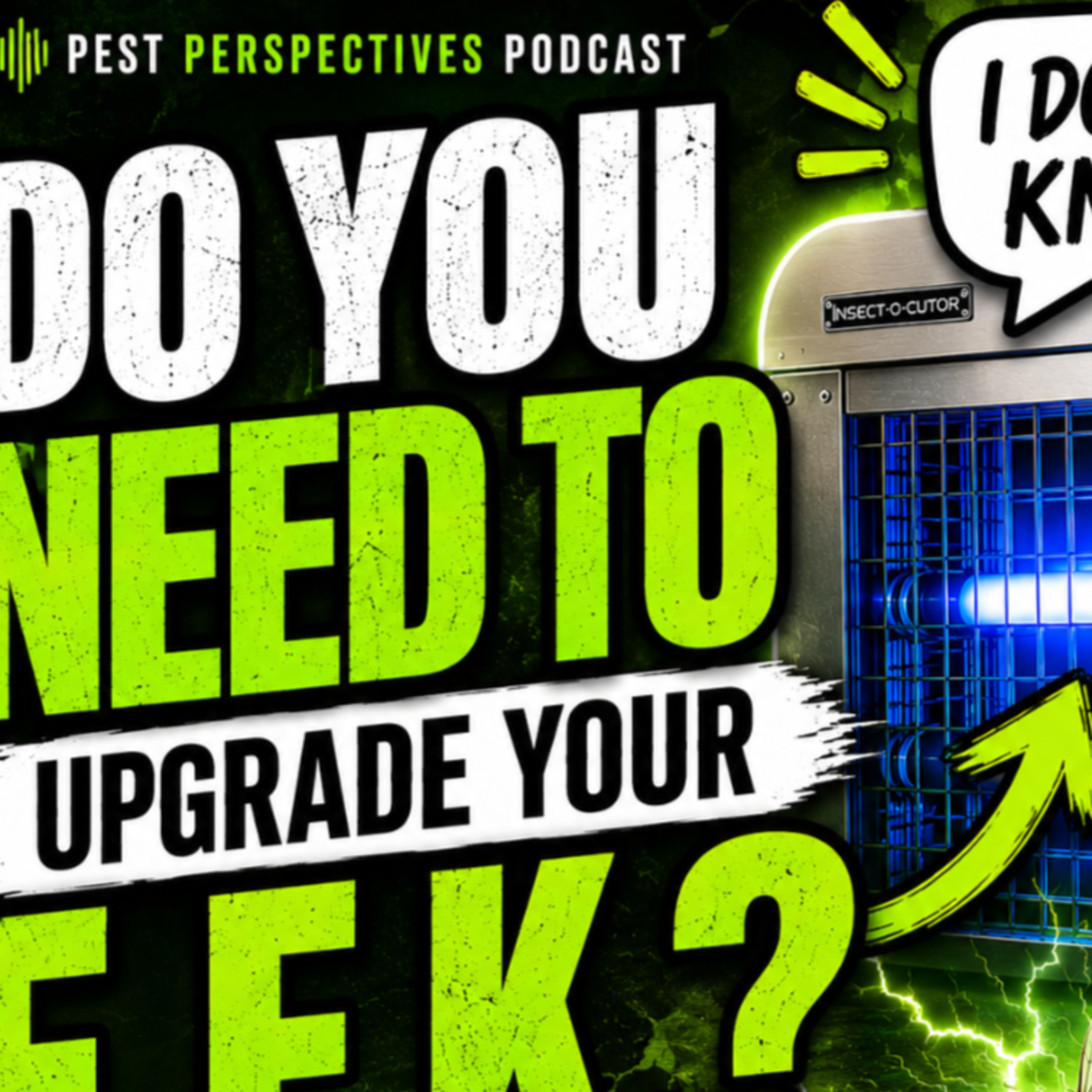
🎙️ Do You Need to Upgrade Your E.F.K. Units? | Expert Advice for Pest Controllers & Food Industry
In this episode
🎙️ Do You Need to Upgrade Your E.F.K. Units? | Expert Advice for Pest Controllers & Food IndustryWondering if it’s time to upgrade your E.F.K. (Electronic Fly Killer) units? In this 12-minute educational clip, Jasmin Emmerson from Opti-Catch and Fotolec Technologies Ltd breaks down everything pest controllers and the food industry need to know — from equipment efficiency to compliance and cost-saving tips.
a clip from pest perspectives ep 11!
💡 Why Listen?
- Essential guidance on E.F.K. upgrades
- Insight on choosing the right equipment for safety and performance
🎧 Tune in now for practical, must-know advice!
Transcribed automatically
I was thinking of, like, that. You beat me to the punch now, explaining that, because I've got to ask you, why was OptiCatch invented? And there you are. That's why. There you go. That's the reason. There is more to it than that. I mean, that's the main reason. But also, I think where we've been until now, if you look at all the different fluorescent EFKs case that you can buy and have been able to buy for many years yeah they all do have different efficacy levels they do all catch flies in slightly different ways i'm not saying that they all catch flies exactly the same so please don't think that but they are all quite predictable in that they will do their job really well they will catch flies well irrespective of which trap you select as long as it's placed properly you know it's at the right height it's in the right placement for you know where you need to put it in order to catch insects so you know broadly speaking they are they are relatively predictable but as you move into the led space it's not quite the same it's not quite just oh you can you can slap any led trap on the wall maybe like an unbranded led trap that you've been imported from um the east and is perhaps not regulated in terms of catch rates things like that you you can't just assume that an led uv light source is going to catch flies as well as the fluorescent light source that you're replacing and so i think there's strong you know making shatterproof coatings for fluorescent lamps mean that most of our end users
are food industry and in a food industry setting whether that's food manufacturing or food handling in restaurants you cannot you can't compromise on fly catch it's what you've got it for so those customers can't just blindly buy any led trap and put it on the wall and expect to necessarily catch the same amount of insects as what they were catching before and i think that can be problematic in certain applications i fully appreciate there are some applications that that it doesn't matter it's a box tick they've ticked a box to say they've got an efk they're never going to look at how many flies are on the glue board it just doesn't bother them but for the food industry which is you know relevant to all of us none of us want flies in our yogurt or our pasta or anything like that um they need to be sure that when they upgrade to led it is an upgrade and that means that you do not compromise your fly catch and i think that's where the market at the moment you know the led market is still in its infancy and i can imagine that for technicians especially it's a bit difficult for them to separate you know which trap is going to mean that my my client's fly catch is not disrupted and is not going to drop
because that can be quite embarrassing for the technician if they've said all that you need to upgrade and then it's not really an upgrade and we were actually an exhibition in Milan back in February where quite a large end user for a large retail giant actually approached me and said that they had upgraded to a certain led trap um they been told they had to because of the fluorescent ban which as you know is is a bit unfair it wasn't true and what happened was they needed double the amount of traps in order to catch the same fly so so any money they're saving on energy savings is completely tied up in buying double the amount of traps and they can't just catch less flies knowingly it's you know it's food manufacturing for a very big retail giant in the UK and so I think that shows that it's really important to be considerate not just what you're you know are you retrofitting are you utilizing your existing equipment but how does this product compare to what my fluorescent lamp was doing where's the independent catch rate data to show me this is how many flies the fluorescent equivalent would ordinarily catch in a three-hour window and this is how many flies this LED product does and are they the same or better on the led side because led is more expensive isn't it so you
don't want to you don't want to pay more and catch less i know obviously you've got the energy savings which is a huge plus and the lack of mercury is a huge plus for the planet there's so many benefits to led but you certainly don't need to rush to upgrade at the detriment to what you're ultimately doing which is pest control you need to you need to control the flies yeah you do i mean it's like i i tell you who come to mind is um jacob from atlas environmental services now he he does a lot of audited sites like you say now when he changes the bulbs he put what a few weeks ago or months months ago it was when he was doing his bulb change there's me think he's got a few and i think he had something like two or three hundred bulbs to change in service all their machines i'm not just saying to a client right you need it's it's all going by the wayside let's chuck we need to chuck all these in the bin or however you take away that would be astronomical amount of money wouldn't it if you were to say to a client we've got to upgrade you got to get a new unit the lot now a retrofit would be perfect for that scenario wouldn't it So that's why it's quite good.
That's what I thought about when you said that, because when you've got, he has big clients, and when you've got people on that scale, it's like, wow, that would be a lot of money, you know, even to be able to replace the entire unit and everything, it will be. I mean, don't get me wrong, there's definitely a place for new LED units, but I think it's all about what's best for the customer and their application, because, you know, there are some units that we can't retrofit into yet. it's not technically viable yet so um the ones with the starters in which are the most common ones they retrofit fine but any any 15 watt t8 kind of unit that doesn't use a starter is using an electronic ballast and there is not currently a retrofit solution on the market for those ballasts because it just a lot it a lot more difficult to get it right and make sure that it functions exactly right in every in every trap and not only that but it becomes incredibly more costly so um going back to general lighting you can get retrofit leds in general lighting and you have one led lamp that does the switch start unit so the ones that use a starter and you have another retrofit led for the electronic ballast so the ones that don't use a starter and you're looking at three times the price for the one that doesn't use a starter because there's just so much more circuitry complexities involved in that development.
And so right now in the insect control space, in the UVA space, there is only retrofit possibilities for switch start units. So, you know, if you have a customer, for example, that has, like you say, 200 or 300 lamps worth of traps and they're all electronic ballast, well, unfortunately, retrofit isn't currently an option for them. But if I were talking to them, I would say, don't rush. if fluorescent is doing its job right now and you're happy with it keep using your fluorescent lamps because who knows where the developments in the coming years will go on retrofit we might get more you know might become more technology technically viable i suppose but also it might be possible to get you know the lamp form factor that you know and love so you know going back to it like an opti catch it looks exactly like a like a fluorescent lamp it fits exactly like a fluorescent lamp it's a very predictable solution you can buy new traps with opti-catch in it so if someone really wanted a normal quote normal lamp style but they need to upgrade their fittings there is still a solution there because i think that's another resistance in the market is that all these different led traps they've all got different fixings and they all do different things and some customers just really like what they've always had which is just that lamp form factor they know what it is they know what it looks like they know exactly when they need to change it and they're just happy with it and so obviously the benefit is that optic catch needs changing every three years rather than every one year but other than that the replacement process is largely the
same it's you know you know whether you're putting an optic catch in or a or a florentin in it it's exactly the same for the technician which i think just makes life a little bit easier doesn't it well yeah but now i'll play devil's advocate now i know there's some resistance in the industry obviously because say opti-catch bulb you replace once every three years um replacing bulbs is quite lucrative it is as in the fluorescent bulbs they can make quite a lot of money and that's why a lot of people ain't switching because they're not going to be able to service it like they were but they can service it but the customer be like you you really need to charge that you're just literally cleaning cleaning it out you know and i have heard that i have yeah and i completely acknowledge that and actually that that was part of our consideration during the development is that you know you could take an oxycatch bulb which pays for itself in its lifetime for the end user but how does that sit with the technician and i think i spoken to a lot of technicians and it quite divisive Some would say that you know it removes revenue for them because they use the yearly replacement as a service, as something that they upsell.
And they obviously can, if they want to, put a margin on the actual lamp itself. And others say, you know what, I'm glad that I don't have to go and change that every year because that's, you know, it's one less thing to do. you know they're still going to change the glue boards and i think again it does depend on if it's glue board traps or or killing grid traps because glue boards would probably be changed i mean in a food environment i'd expect it to be changed at least four times a year you know correct me if i'm wrong so i don't know yeah they're still going anyway but obviously non-food environments yeah i can totally see why it reduces that that visit and therefore the associated fees that you can charge with it but i would say you know in that case i'd say keep buying fluorescent i'm not trying to push anyone to opti catch if it's not right for those circumstances buy fluorescent i'm you know i'm very passionate that the fluorescent supply chain has got as i've said many years ahead of it and and i think the best way to approach led is here's all the benefits of opti catch here's the reasons why i think it's good but if you don't keep with your fluorescent why why change it if you're not ready to why change it if it's not going to suit your personal business model i love that because it's it's genuine it's not like buy my opti catch it's the best you must do it like you're like if you're happy with what you're happy with carry on it's like because that's how you can
tell it's it's not all about money for you it's teaching people education and letting people have what they're happy with. Say for instance as well, I mean, actually, no, I don't sell many EFKs. I try, but I fail. I do. A lot of my clients are just not interested. I'll be honest. I try, but, you know, it's just one of them things in e-commercials. Yeah, it's not massively regulated in those particular applications, is it? It's like, well, it's going to happen. Yeah. I tell them that your EFK is rubbish in a nice way and they're not i can get you a good one now i'm not interested i think what you'll find is people come around to it when they have a fly infestation one day and they think oh i said that to one customer i did i said it's not a problem now with the eho but say like uh the eho walks in the summer and you've got a fly infestation then then it will be a problem but like for us pest control is proactive pest control should never be ideally reactive yeah but if your customer decides to approach it reactively and they're just going to not have something in place until the time that they get an infestation well you've done your bit you've advised them what they need to proactively do but you can only you know you can only say so much you You can take a horse to water, but you can't make it drink.
Sponsored by

 Spotify
 Apple Podcasts
 Goodpods
 YouTube
 Amazon Music
 Audible
 Castbox
 Castro
 Deezer
 Moon FM
 Overcast
 Pocket Casts
 Podbean
 Podcast Addict
 Podcast Republic