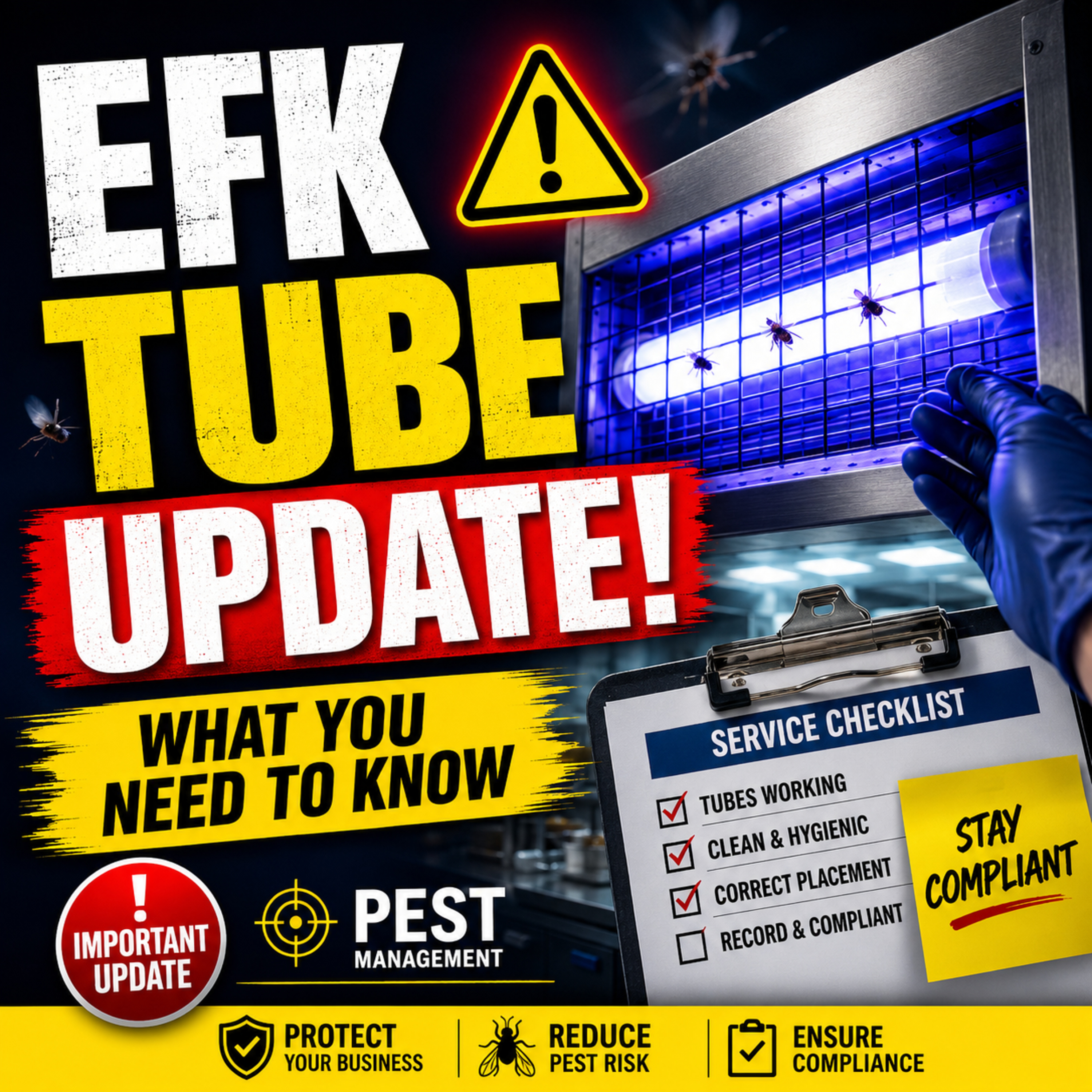
EFK Fluorescent Tube Update for Pest Management: What You Need to Know
In this episode
Are EFK fluorescent tubes changing in the pest management industry?
In this episode of the Pest Perspectives Podcast, Shaun Muller is joined by Jasmin Emmerson from Opti-Catch & Fotolec Technologies Ltd to discuss the latest updates around EFK fluorescent tubes, UV tubes and insect light trap servicing.
This is an important conversation for pest control professionals, especially those involved in commercial pest management, audit-ready sites, EFK maintenance, fly control and ongoing servicing work.
Jasmin helps break down what pest controllers need to know, what the changes could mean in practice, and how the industry may need to think about future planning, compliance, equipment decisions and servicing standards.
Topics covered include:
EFK fluorescent tube updates
UV tubes and insect light traps
Electric fly killer servicing
Fly control equipment maintenance
Pest management industry changes
Compliance and service planning
What pest professionals need to know going forward
a clip from pest perspectives ep 11!
Whether you work in domestic, commercial or audited-site pest control, this episode gives a practical look at a key industry topic affecting EFK servicing and professional fly control.
Subscribe to Pest Perspectives for more pest control industry insight, practical discussions and conversations for UK pest professionals.
Pest Perspectives Podcast is a UK pest control podcast hosted by Shaun Muller of Oakham Pest Control Ltd. The show features practical conversations with pest control technicians, business owners, suppliers and industry experts, covering rodent control, drainage investigations, bee removal, bed bugs, wasps, commercial pest management, compliance, business growth and wider pest industry topics.
Listen, watch and learn more at:
https://www.pestperspectivespodcast.co.uk
Transcribed automatically
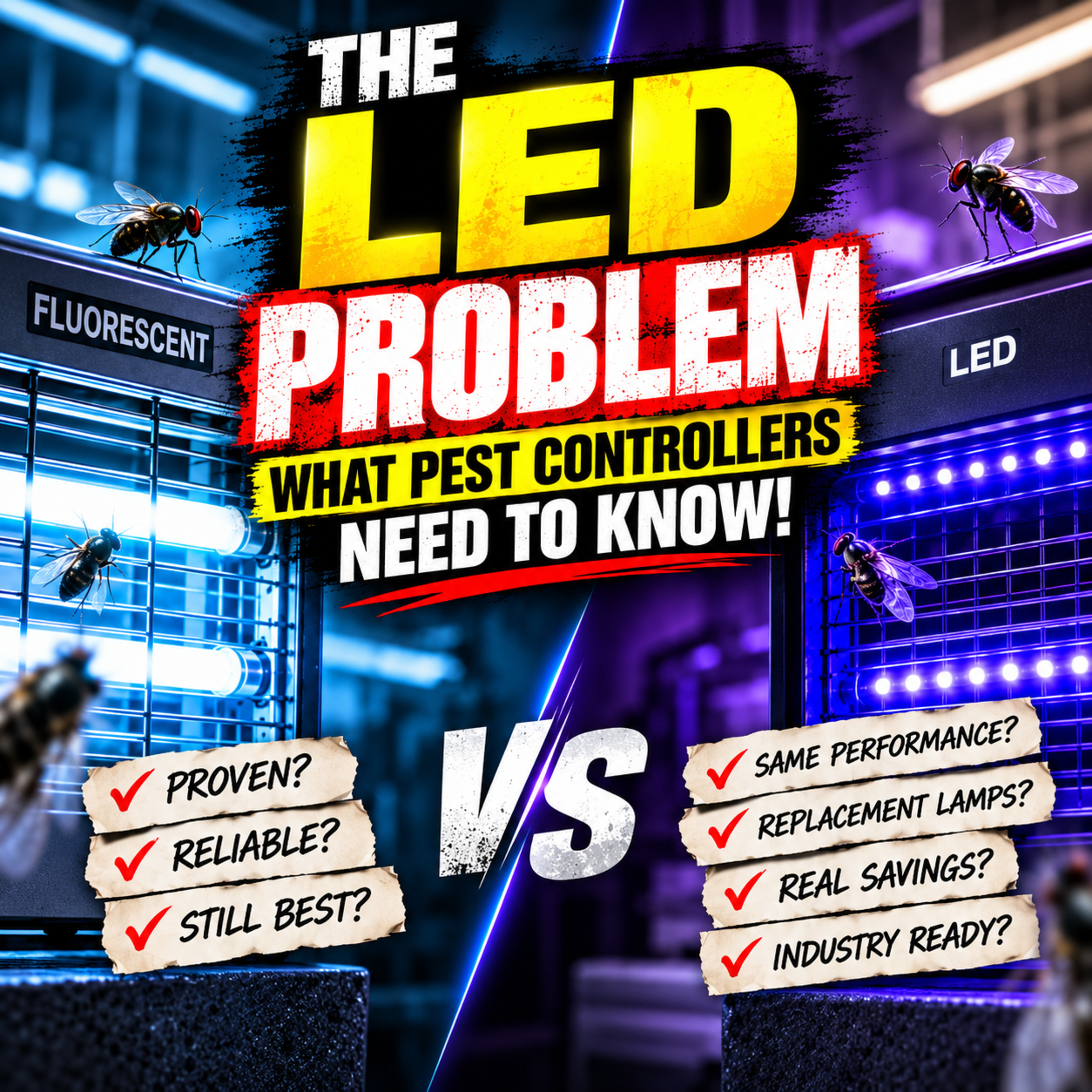
people some efk information jasmine that's what they're all here for i'm sure yeah are they banning fluorescent tubes are they going to be illegal come on they're going to arrest me so i don't think that's a clear yes or no answer and i'll explain why if you look at general lighting so like the lights that you would have in your home or your garage it's something that is purely just illuminating a room and has no other function fluorescent lamps in that application were banned in 2023 and so i think that it was at that point that the industry went a little bit crazy everyone suddenly thought oh no they banned them in this application we're next um which is an understandable connection to make and i have to say i think that wasn't helped by some sort of scaremongering by those in the industry who probably knew better but were sort of using it as a way to push their led product maybe early maybe encouraging customers to upgrade early which of course is a capital outlay for them and you can understand why some irresponsible um organizations would attempt that not all um but realistically general lighting was on a path to be banned from around 2011 and it took all the way until 2023 for that ban to happen.
And the reason being is that a ban generally does not take place until, if you imagine, every single type of EFK that you can get So not just the linear TA 18 inch you know the ones um but even like the obscure kind of more compact fluorescent ones like the energy saver bulb looking ones there's many different shapes and styles of fluorescent lamps and you if you have to imagine you would need a retrofit led solution for pretty much every single socket before that band can take place which is what happened in general lighting it took from 2011 until 2023 for you to basically look at any socket in your home regardless of whether it's a six foot lamp or an 18 inch lamp and be able to find an led alternative that fits into your socket without you having to buy a whole new fixture so that's how many years that took in the general life in my kitchen though it's really weird um i've got an led light thing and like when it breaks yeah they come out and they take the entire thing out and replace it i thought that's wasting more what what i don't understand you have to replace the whole thing that's becoming that's actually becoming uh the next thing in general lighting to be regulated on so they're focusing the lighting industry on a circular economy
which would mean that and you might have heard about it with washing machines and things as well because there's quite a big push at the minute even in washing machines and and white goods that if they break you should be able to reasonably repair them and use the same housing rather than just send a whole washing machine to landfill or send a whole light fitting to landfill that kind of emphasis on a circular economy is exactly that they don want masses and masses of light fittings to have to go to be disposed of i mean that not sustainable doesn matter which way you look at it and so realistically what we know now about the fluorescent lamps that we use in our efks or ilts is that the um when something is on a pathway for restrictions or regulations the longest extension you can ever request and be granted is five years so the last extension was granted on these tubes that we use for insect control in 2022 which means that that five-year extension is up in 2027 so a lot of people would take that to mean oh my goodness the lamps are being banned in 2027 and and that is just simply not we don't know yet we don't know yet exactly what will happen but based on what we know about how many retrofit
lamps are available in market how many traps are still in service that need to continue to be serviced i mean if you think a brand new trap that you buy today maybe just a 2.15 watt you don't want to have to bin that in less than two years time because you can't get the lamps anymore because that trap is going to go for years and years and years and you bought it today a brand new trap so realistically based on all of that information um it the lighting industry widely believes and and is extremely confident that we will see another five-year extension, which would take us to more like 2032.
Okay. Because that extension would start in 2027 when the current one lapses. Now that not necessarily to say that it will definitely be five years They may look at where we at and say do you know what we only need another another three years actually and that enough time to get the you know the retrofit space up and where it needs to be but certainly what we do know is that they not going to suddenly become unavailable within the next two years there's no need to and that's something that I feel really passionate about and is really part of the reason why photolect collectively decided that we needed to push a retrofit solution is because I really do not want end users or technicians to be made to feel like oh my gosh I need to spend several hundred pounds on a brand new trap before I'm ready to if they're ready to if their trap's hanging off the wall and it's just done you know it's been there for 15 years and absolutely needs replacing by all means replace the trap um but what I don't like is the thought of someone having to upgrade early or feeling like they have to part with money early because it's not just necessarily about the ethics surrounding art they've not really got their money's worth out of that fluorescent trap because they're binning it early but it's also for me you know where's that going that's
going to landfill that's being disposed of we've got a serious sustainability issue on our hands as a planet and that's not helping things so so my view is that led is not truly sustainable if it means prematurely disposing of a unit that is on the wall um and I think most people live their lives like that anyway I mean like if you had a light fitting at home which you could just buy a new replacement bulb for whether it's an led bulb or an old-fashioned bulb you're going to do that you're not going to say oh do you know what I'm going to go and buy a whole new light fitting and then get that wired in and you know it's common sense isn't it
Sponsored by



 Spotify
 Apple Podcasts
 Goodpods
 YouTube
 Amazon Music
 Audible
 Castbox
 Castro
 Deezer
 Moon FM
 Overcast
 Pocket Casts
 Podbean
 Podcast Addict
 Podcast Republic