Pest Perspectives LIVE at PestTech 2026: The Future of Pest Management Revealed
A Milestone Moment for Pest Perspectives
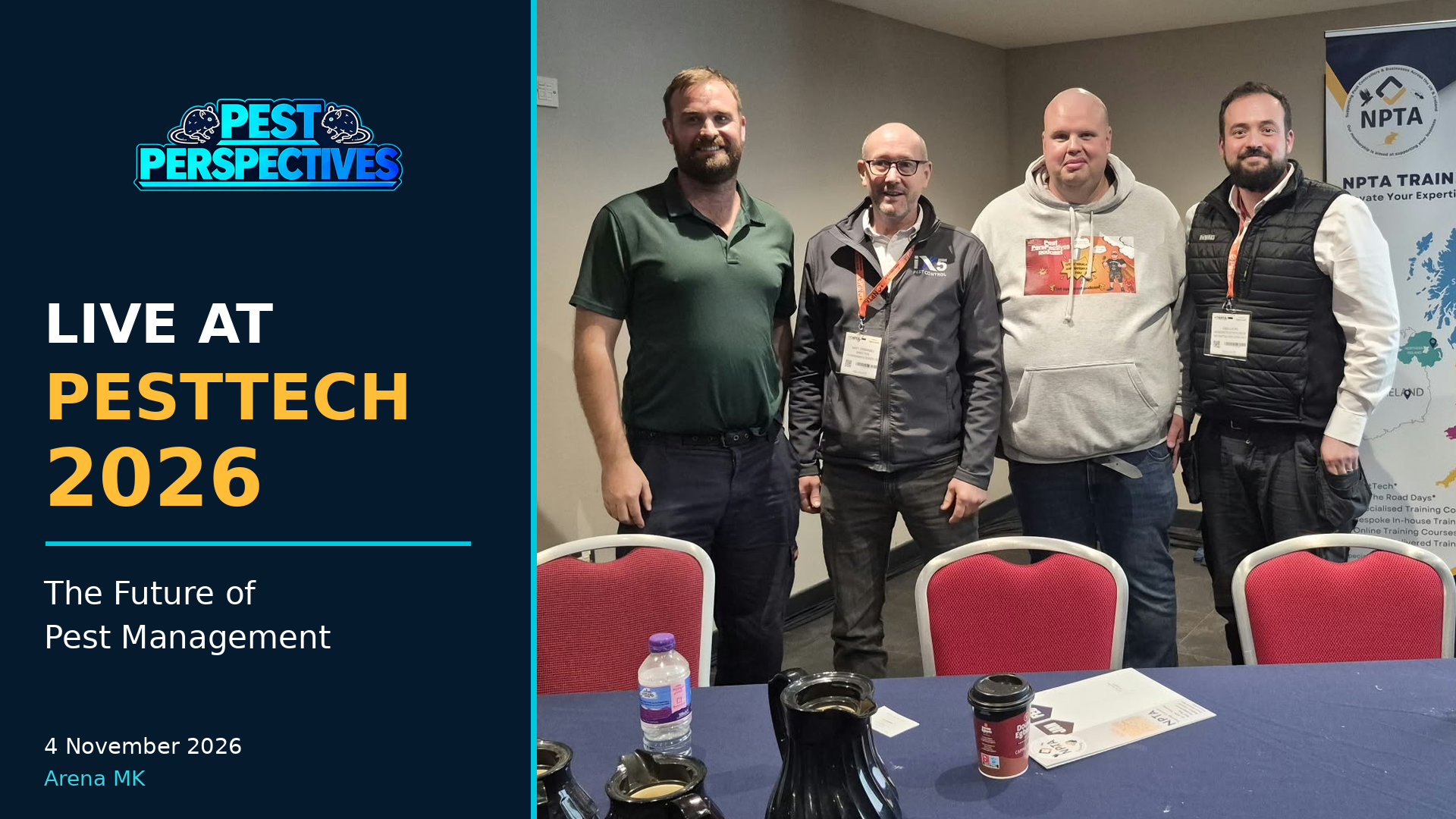
There’s something special about taking a podcast from behind the microphone and putting it in front of a live audience. For Shaun Muller and the Pest Perspectives team, PestTech 2026 marked exactly that—a first-time live seminar panel discussion at Arena MK in Milton Keynes on 4 November 2026.
The nerves were real (Shaun admits he forgot to introduce the panellists at the start—a lesson learned for future events), but the value delivered was undeniable. What emerged was a candid, multi-perspective discussion about the state of the pest management industry, the challenges we collectively face, and where we need to focus our efforts to move forward.
The Panel: Three Voices, One Vision
Joining Shaun on stage were three respected pest management professionals, each bringing unique insights from different corners of the industry:
- Matt O’Donnell – Founder and Director of iX5 Pest Control
- Karl Robertson – HF Environmental
- Daniel Lucas – Pest Smart Solutions & Consultancy
Together, they explored some of the most pressing questions facing pest professionals today. And while their experiences differ, their underlying concerns about industry standards, professionalism, and future direction proved remarkably aligned.
The Core Industry Challenges
The Race to the Bottom: A Problem We Keep Talking About But Never Fix
One of the most critical issues raised was the industry’s persistent devaluation of services. It’s a topic that comes up in conversations across the sector, yet meaningful change remains elusive.
The panellists drew a telling comparison: when you call a gas engineer or a plumber, pricing remains relatively consistent across providers. The choice becomes about supplier reliability, rapport, and service quality—not who can undercut the competition the most. Yet in pest control, the race to the bottom continues unchecked.
This creates a vicious cycle. When customers perceive pest control as a commodity service rather than a professional expertise, they shop on price alone. This drives margins down, which can incentivize cutting corners, which ultimately damages the industry’s reputation and professional standing.
The solution? Industry-wide commitment to valuing what we do. As entrepreneurs and business owners, we understand that money makes the world go round—but collectively devaluing our services only ensures we all lose.
The Consistency Problem: Where Are Our Standards?
Another issue that emerged was the lack of consistency in professional advice across the industry. Different pest controllers, different companies, different member organizations—all giving conflicting guidance on the same issues.
Take bats as an example. Some pest professionals are told that identifying bat activity means they cannot re-enter a loft without committing a criminal offense. Yet the Bat Conservation Trust publishes guidance indicating that, under certain circumstances with proper caveats, some work can be undertaken.
This inconsistency creates confusion for professionals and undermines customer confidence. Member organizations have a critical role to play here in establishing clear, definitive guidance on complex issues like bat protection, waste management, and carcass disposal.
Other unspoken problems in the industry—what to do with half-empty sprayers, how to dispose of carcasses properly, hazardous waste streams—need transparent, industry-wide standards.
What Effective Pest Management Actually Looks Like
Integrated Pest Management: Beyond the Quick Fix
The discussion shifted to what effective pest management actually looks like. A recurring theme was the danger of treating proofing as a standalone solution.
Yes, proofing is essential. Yes, it should be part of every pest control professional’s toolkit. But proofing alone won’t solve pest problems—and pretending it will is where the industry often stumbles.
True pest management requires an integrated approach:
- Customer education – Getting clients to understand and buy into the treatment plan
- Hygiene and housekeeping – Addressing the environmental factors that attract pests
- Habitat management – Denying pests water sources, food, and shelter
- Identification of root causes – Understanding ingress points and behavioral patterns
- Professional follow-up – Maintaining visit frequency to catch issues early
The panellists emphasized that pest controllers are, fundamentally, environmental and habitat specialists. We’re not just fixing immediate problems; we’re taking customers on a journey toward long-term pest prevention and management.
This requires expertise, time, and professionalism—all things that deserve appropriate compensation.
Solutions and Future Directions
Licensing: A Controversial Solution?
One panellist advocated for something that’s sure to spark debate: industry licensing. The argument is straightforward—licensing requirements would weed out the operators undercutting the market with £25 treatments and no real expertise, reducing secondary infestations and elevating the industry’s professional standing.
Whether licensing is the answer or not, the underlying point resonates: the industry needs mechanisms to maintain quality standards and prevent the race to the bottom from continuing unchecked.
AI and Technology: Tools, Not Replacements
The conversation around artificial intelligence and digital monitoring systems revealed a nuanced perspective. AI is undeniably valuable—it saves time on report writing, helps with job management, enables strategic business planning, and can even scout for tender opportunities.
But here’s the critical insight: AI is only as good as the person using it.
A pest controller who simply asks ChatGPT “I saw a rat today, what do I do?” is just transferring customer knowledge from Google to AI. That’s not progress; that’s abdication of professional responsibility.
Where AI excels is when expert pest professionals use it strategically—to enhance their expertise, not replace it. And crucially, technology should never undermine the gut instinct and on-site observation skills that experienced pest controllers develop over years of work.
Digital traps and self-monitoring systems are fantastic tools, but they’ll never capture what a trained professional notices while walking a site—the subtle signs, the behavioral patterns, the environmental factors that point to emerging problems.
Bringing Youth Into Pest Control
The discussion touched on an industry-wide concern: attracting younger professionals to pest management. The challenge? Perception. When young people hear “pest control,” they think dirt, rodents, and unpleasantness—not a rewarding, professional career.
Rebranding pest management as environmental and hygiene expertise, rather than “pest control,” could help shift perceptions. This isn’t just semantics; it’s about how we present our profession to the next generation.
Moving Forward: Collaboration Over Dogma
Perhaps the most important takeaway from the panel was this: the future of pest management lies in collaboration, not competition over who has the “right” answer.
Every customer is different. Every site presents unique challenges. The professionals who thrive will be those who embrace multiple tools, multiple approaches, and present customers with outcomes rather than quick fixes.
This requires:
- Stopping the race to the bottom on pricing
- Raising and maintaining professional standards
- Establishing industry-wide consistency on complex issues
- Using technology to enhance (not replace) professional expertise
- Investing in attracting and developing the next generation of pest professionals
Listen to the Full Discussion
This live panel discussion at PestTech 2026 represents the kind of honest, practical conversation the pest management industry needs. While this article captures the key themes, the full episode offers deeper insights, real-world examples, and the dynamic exchange between four experienced professionals grappling with these critical issues.
Listen to the full episode of Pest Perspectives LIVE at PestTech 2026 now to hear the complete panel discussion, and don’t miss future episodes exploring licensing, waste management, bat protection guidance, and other topics raised during this groundbreaking live seminar.