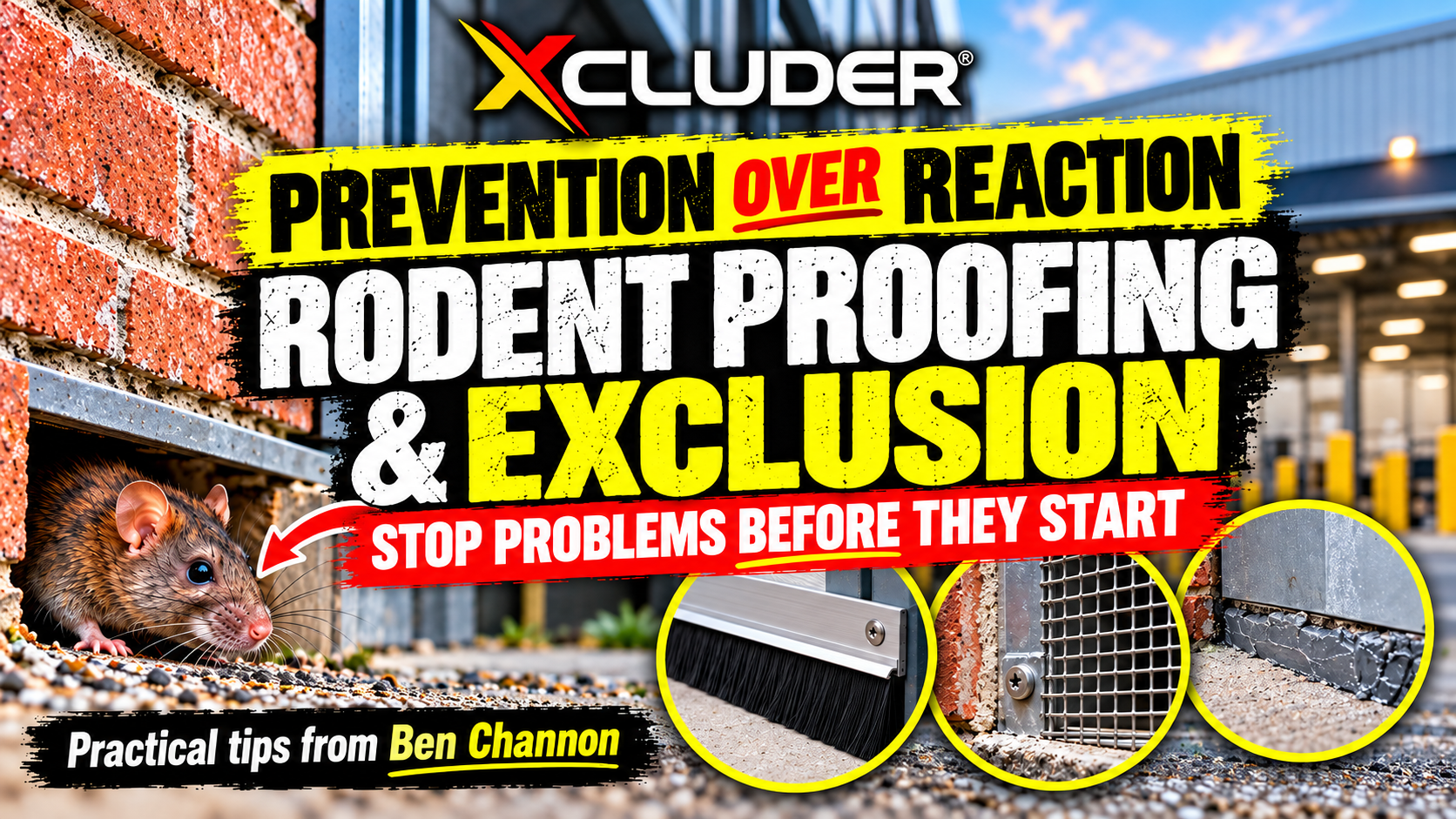
Rodent Proofing & Exclusion: Practical Tips from Ben Channon, ACE
Related Episode
084:Rodent Proofing & Exclusion Tips | Ben Channon, XcluderPrevention Over Reaction
Pest management typically focuses on treatment—traps, baits, monitoring. But exclusion prevents the problem entirely. Ben Channon, who progressed from service technician to exclusion specialist in high-pressure environments like Chicago, advocates for this prevention-first approach.
Exclusion is pest prevention. It’s the difference between reacting to infestations and building systems that stop them from occurring. While straightforward in concept, many professionals and clients still operate reactively—calling only after spotting rodents.
The Food Manufacturing Standard
Ben’s experience in audited food facilities reveals what true prevention demands. Third-party certifications (B.R.C.G.S., FSSC 22000) require prevention-focused strategies with robust documentation. Ben managed sites with 150 external monitoring boxes and 250 internal traps—far beyond routine check-ins.
The key insight: principles that protect food manufacturing plants apply to any environment. Prevention works when implemented strategically.
Common Proofing Mistakes
Incomplete work is the primary failure. Clients resist comprehensive approaches, wanting only specific areas addressed. This undermines the strategy—rodents find paths of least resistance.
Professionals also underestimate scope. Comprehensive proofing requires:
- Thorough inspection of all entry points
- Understanding rodent movement patterns
- Knowledge of proper materials and installation
- Follow-up verification
Frame exclusion as a solution, not upselling. Clients invest when they see genuine problem-solving.
UK Domestic Opportunities
The UK market is shifting toward prevention-focused work in residential settings. Proofing surveys identifying defects are gaining traction, with homeowners investing in comprehensive solutions. However, sewer entry points make complete guarantees unrealistic—position services as addressing identified defects instead.
Digital Monitoring and Technology
Real-time monitoring devices are valuable for high-risk facilities and inaccessible spaces like roof voids. However, they’re cost-prohibitive for smaller clients. Traditional monitoring combined with strategic exclusion remains most practical for domestic and small commercial work.
The Bigger Picture
Exclusion requires understanding building structures, materials, regulations, and client psychology. It commands higher fees than routine monitoring, builds loyalty through prevention, and positions your business as solution-oriented.
Taking Action
Assess your client base for exclusion opportunities. Invest in learning proper proofing techniques. Shift your mindset toward prevention—it benefits clients, your business, and the industry.
Want to dive deeper? Listen to the full episode with Ben Channon on the Pest Perspectives Podcast for specific techniques and real-world case studies. Available on Spotify, Apple Podcasts, and YouTube.